Wild Camping or Campsite? What Coastal Campers Need to Know
A single night on a remote beach, tent glowing from inside, nobody else around: it is one of the best things about the British coast. It is also where a lot of otherwise sensible people get it wrong. Wild camping and campsite camping run on different rules, they ask different things of you, and on the coast the difference matters more than inland — because the land usually belongs to someone you've never heard of, and the sea does not read your plans.
Get it right and you get a memory for life. Get it wrong and you get a 4am knock, a fine, or a very long walk back to the car with a soaked sleeping bag. Most of the trouble comes down to a simple mismatch of expectation: people think they are choosing between a view and a loo, when actually they are choosing between two entirely different legal and practical worlds.
What the law actually says
There is no single UK answer. Where you are decides almost everything.
England and Wales
Camping without the landowner's permission is generally trespass. Trespass is a civil matter rather than a crime, which is why you sometimes hear people claim wild camping is "not illegal" — but that is a thin defence. It means you can be asked to move, and refusing can escalate quickly. More to the point, plenty of coastal spots are covered by local byelaws or Public Spaces Protection Orders that make camping on the beach, promenade or seafront an offence with a fine attached. Councils publish these, and a search of the local authority's website before you travel tells you more than any forum thread.
A handful of areas tolerate informal camping — some National Park land, stretches of open access land, parts of Dartmoor. These are exceptions, not a general permission, and they can change fast. Even Dartmoor, long the poster child for informal camping, tightened up after a court ruling and now runs a permit scheme on certain commons. Treat any "you're allowed there" advice older than a year or two as out of date until you have checked it yourself.
Two further wrinkles catch people out. First, open access land is generally for walking and other quiet recreation, not for pitching tents, and coastal access strips created under the England Coast Path come with their own restrictions. Second, much of the foreshore around England and Wales belongs to the Crown Estate — which gives you no camping rights whatsoever, and often no right to park above it either.
Scotland
Scotland is genuinely different. The Land Reform (Scotland) Act 2003 gives statutory access rights, and light, wild camping is permitted on most unenclosed land, including much of the coast, provided you follow the Outdoor Access Code. Even so, "most" is doing a lot of work: land next to buildings, gardens and areas with specific byelaws is excluded, and some popular stretches have seasonal restrictions because of overcrowding and litter. Motor vehicles are not covered by the same rights.
Northern Ireland
Access law here is more restrictive, and there is no equivalent statutory right to wild camp. Assume you need permission, and get it in writing if you can.
Vans, motorhomes and car parks
Sleeping in a vehicle overnight is a separate question from camping, and coastal councils have been firm about it. "No overnight sleeping" signs in seafront car parks are backed by byelaws and PSPOs more often than people assume, and enforcement frequently happens at exactly the hour you are least able to argue. A campsite pitch is usually cheaper than the fine.
Why the coast is harder than the hills
Inland, a bad pitch is an inconvenience. On the coast, it can be dangerous. Tides move faster than people believe, on flat sand they can cut you off behind rather than in front of you, and a beach that looks like a firm car park at low water can be quicksand at the edge of the run-off. Clifftop paths erode, and after rain the ground you planned to camp on may simply not be there.
Weather is another matter. Sea fog, wind that arrives sideways, salt spray soaking everything by 2am — coastal nights are often colder and wetter than the forecast for the nearest town suggests. Inland sites are sheltered by trees and hedges. A beach has no shelter at all.
What a "free" night really costs
Wild camping is cheap in cash and expensive in planning. Consider what you are actually buying with the saved pitch fee:
- Water. You carry every litre in, and carry your grey water and washing-up water out.
- Toilets. There are none. This is where most coastal wild camping problems begin.
- Parking. Overnight parking near the coast is often restricted, and a ticket runs to £50 or more.
- Risk of moving on. Being asked to leave at midnight means packing in the dark, often onto ground you have not seen.
- Weather bail-outs. With no alternative, a change in the forecast means going home.
None of that makes wild camping wrong. It just means the pitch fee you "saved" was never the whole cost.
What a campsite is actually selling you
A decent coastal campsite sells you far more than a square of grass. You get a water tap, drainage, toilets and showers, a bin, a drying room if you are lucky, and someone who knows the tide times and the state of the path to the next bay. You get a car that is parked legally. You get the option of leaving the tent up while you walk somewhere for the day without wondering whether it will still be there when you get back.
You also get the small social thing that makes coastal camping nicer than people expect: a warden who says the wind is due to swing at three, or a neighbour who lends you a mallet. Wild camping is lovely for the solitude. It is a poor place to discover you have forgotten something important.
A night on the coast goes wrong in one of two ways: you were not allowed to be there, or you were not prepared to be there. Campsites solve the first. Planning solves the second.
How to choose
- Check the land, not the vibe. Find the landowner or the byelaw. If you cannot, assume the answer is no.
- Match the site to the trip. A one-night stop before a long walk suits a basic farm site. A base for a week of coastal walking suits somewhere with showers and a drying room.
- Read the site rules properly. Fire pits, dogs, generators, arrival times and group sizes are the usual flashpoints.
- Book ahead in season. Coastal sites in Cornwall, Pembrokeshire, Northumberland and the Highlands fill up weeks out, especially for bank holidays.
- Have a fallback. Know one campsite within an hour of your wild pitch that takes late arrivals.
- Tell someone your plan. Where you are going, when you will check in, and when to worry.
Leave nothing but footprints
If you do camp wild, and it is legal where you are, the standards are straightforward: arrive late, leave early, keep groups small, camp on durable ground above the tide line, use a stove rather than a fire, carry out everything including food waste, and bury human waste properly or — better — carry it out. Do not create a fire ring. Do not dam a stream. Do not hang things off fences or walls.
The reason this matters beyond the individual night is access. Coastal landowners who have a bad experience close the gate for everyone, and it is usually campers who arrive next summer who pay for it. Good behaviour is not just polite; it is what keeps the option open.
So: wild or campsite? If you want solitude, a legal location and a lightweight kit, wild camping on the coast is superb. If you want a shower, an early start on a long walk, or a night that does not depend on getting the tide right, take the pitch and pay the fee. Both are good nights out. Only one of them will wake you at four in the morning to ask what you think you are doing.
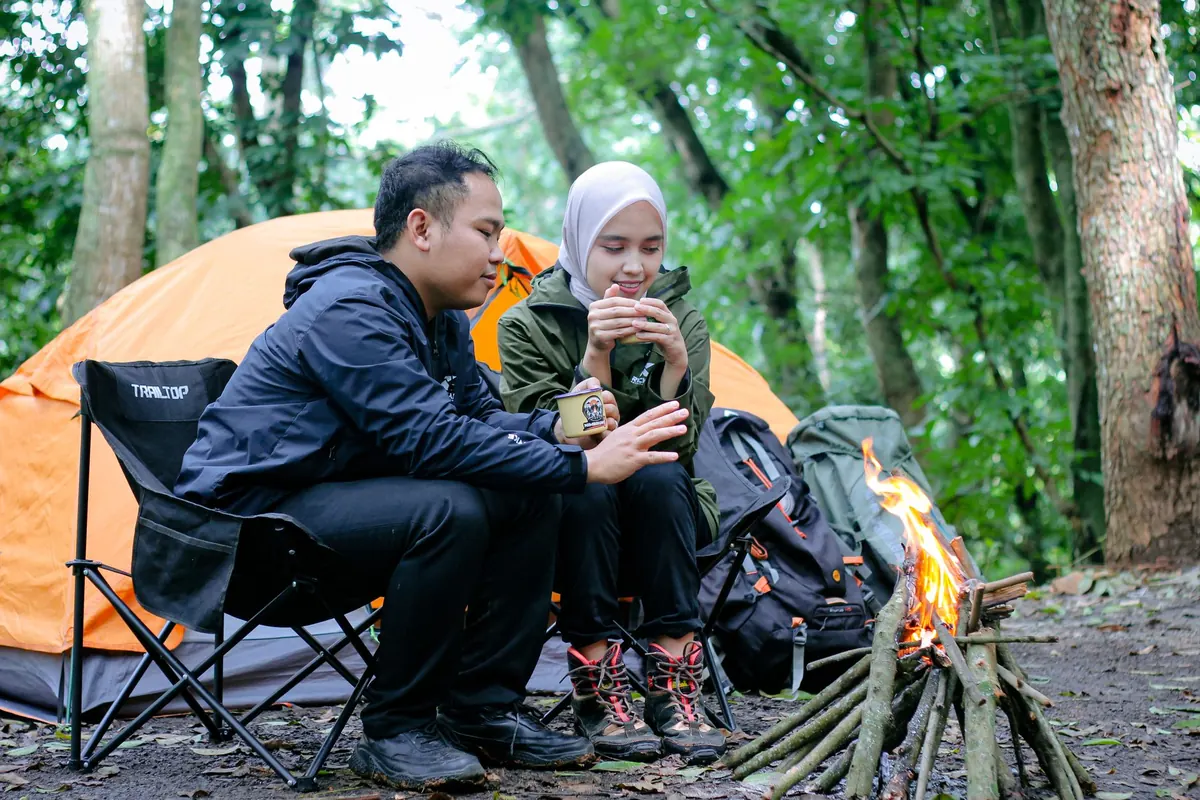
Photo: Enrique / Pexels
You Might Also Like
A worked two-day plan for an autumn or spring weekend on the Pembrokeshire coast, pairing a cliff walk with a sheltered paddle and a campsite base — plus what to book first.
Sand, salt and a steady onshore breeze wreck kit lists built for woodland sites. Here are the fifteen things coastal first-timers most often leave at home.